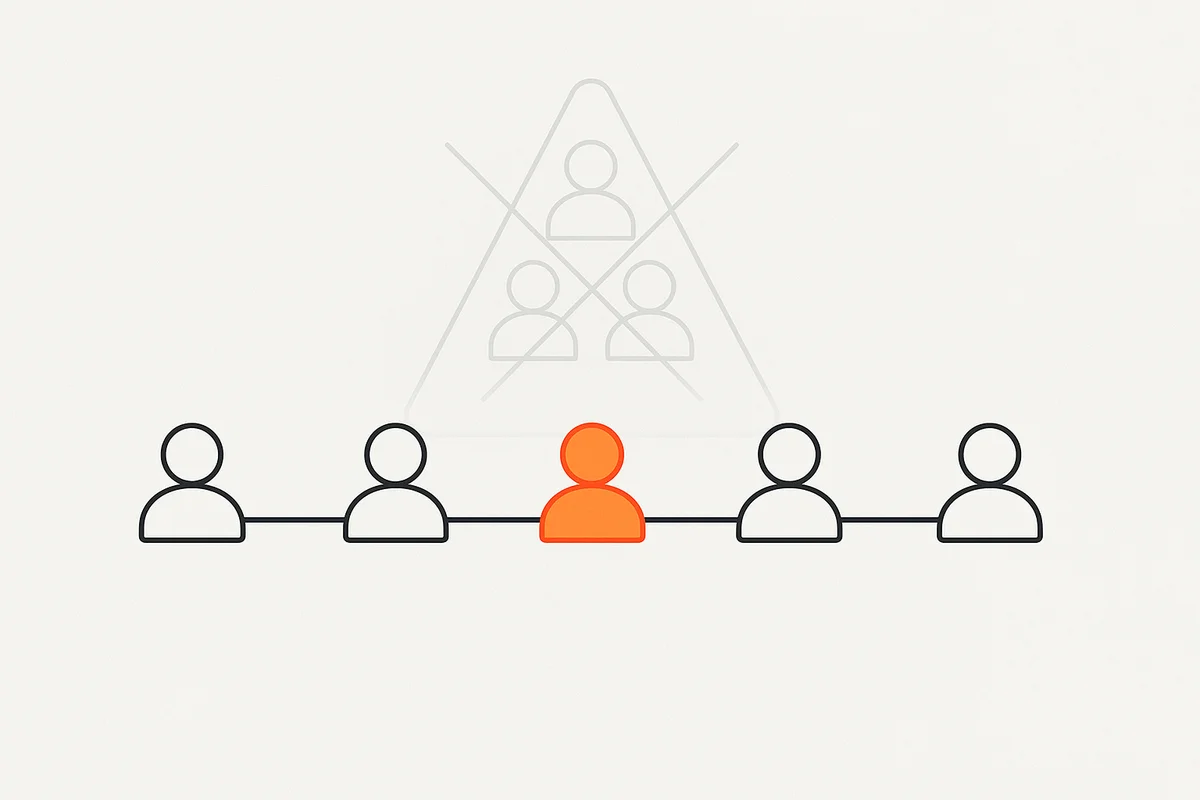
We don't have a Head of Engineering. No VP of Technology. No Engineering Manager.
No team leads, no department heads, no middle management.
Just engineers. External architecture expertise when it matters. A Managing Director who owns client projects. That's the entire structure.
This isn't a cost-cutting measure. It's a conviction.
Why We Do It Differently
In larger organizations, management solves a real problem: coordination. 200 consultants, 40 projects, 15 clients. At that scale, you need managers. It works.
At our size, we've consciously decided against it. We create the structure that fits our reality.
What Happens When You Remove Managers
First: Speed. Architecture decisions at FNTIO happen in minutes, not days.
No ticket, no escalation process, no meeting with the team lead who passes it on to the practice lead. Short paths, direct communication.
With TeamAssistant, our own SaaS product, this shows every day. A small team of engineers builds an enterprise AI platform. Architecture decisions happen directly in the team: which AI model, which auth solution, how the skills system works. No product owner who prioritizes first. No team lead who aligns first. The engineers who write the code make the decisions. And execute them the same day.
Second: Accountability. Without managers, there's no one to hide behind. Every engineer is directly responsible for their code, their architecture decisions, their results. That sounds like pressure. It is. But it's the right kind of pressure, because it's directed at outcomes, not process compliance.
Third: Honest information. In an organization with three management layers, every piece of information gets filtered before it reaches the top. Problems get downplayed, risks get relativized, successes get inflated. At FNTIO, the engineer who wrote the code tells me directly what works and what doesn't. No translation losses. No political filters.
How It Works
No managers doesn't mean no structure. It means a different structure.
Project ownership instead of team leadership. Every project has a responsible engineer. They make technical decisions, coordinate with the client, and stand accountable for the result. This isn't a management role. It's an engineering role with accountability.
Architecture standards through code reviews. Engineering standards aren't enforced through processes, but through code reviews and architecture feedback. Critical architecture decisions are discussed in the team, with external sparring when needed.
AI as a coordination tool. Project overviews, status reports, resource planning: at FNTIO,
AI handles this. Not as an experiment, but as a permanent part of how we work. We're building the very tool with TeamAssistant that makes coordination without managers possible.
Transparency instead of reporting. Everyone sees every repository. Everyone can look into every project. There are no information silos because there's no one who holds an information monopoly. This eliminates 80 % of the need for management meetings.
Deliberate Trade-offs
This model is a deliberate choice with clear trade-offs.
We resolve conflicts directly. When two engineers have different architecture approaches, it gets resolved in the team. Short paths, clear decision principles. Architecture decisions happen in the team, not in committees.
Career development is a leadership responsibility. We conduct development conversations personally. Not delegated, not formalized. That's more effort, but closer to the people.
We hire experienced engineers. Without dedicated team leads, we need engineers who work independently from day one. We filter for this in hiring: We look for people who want to be productive in their first week.
What Clients Gain From This
Clients feel the difference without being able to name it.
They notice that the engineer they work with can make decisions. Immediately.
Without checking with a manager who doesn't know the project.
They notice that nobody wastes time on internal alignment that doesn't help the project.
They notice that their budget goes into engineering, not overhead.
At Siemens Energy, our HR Data Hub team reduced platform operating costs from over one million euros to under 40,000 euros. With a focused engineering team where 100 % of capacity flows into the project.
A Model for Our Size
This model is deliberately designed for our size and our way of working. The structure fits the reality. And we'll adapt the structure when reality demands it.
If we ever need managers, we'll have them. But only when the problem exists. Not before.